What is Cub Scouts?
Cub scout programming includes various skill development for this critical age range, including:
- Character development. The Scouting America is renowned for its commitment to positive Scout character traits. Through a variety of engaging activities and experiences, Scouts learn to be trustworthy, loyal, helpful, friendly, courteous, kind, obedient, cheerful, thrifty, brave, clean, and reverent. These core values help shape their character, fostering personal growth, integrity, and empathy.
- Leadership skills. Scouting offers numerous opportunities for young people to develop leadership skills. Whether organizing a community service project or leading a team during outdoor expeditions, Scouts learn to take charge, make decisions, and motivate others. These leadership experiences cultivate confidence and prepare them for future roles in school, careers, and community involvement.
- Outdoor adventures. One of the hallmarks of the Scouting is its emphasis on outdoor activities. Scouting provides a range of opportunities for children to explore nature, develop outdoor skills, and engage in adventure. From camping, hiking, and fishing, Scouts are encouraged to appreciate and respect the environment while building self-reliance and resilience.
- Lifelong friendships. The bonds formed during Scouting often last a lifetime. Scouts join a community of like-minded individuals, forging strong friendships based on shared experiences and common values. Through teamwork and camaraderie, they learn to work collaboratively, respect diversity, and build lasting connections that extend far beyond their Scouting years.
- Service to others. The Scouting America places a strong emphasis on community service. By engaging in service projects, Scouts learn the value of giving back and making a positive impact on their communities. Whether it’s volunteering at local food banks, participating in conservation efforts, or supporting charitable organizations, Scouts develop a sense of responsibility and compassion for others.
- Personal growth and self-confidence. Scouting encourages personal growth by providing challenges and opportunities for individual achievement. Through earning merit badges, advancing in rank, and setting and achieving personal goals, Scouts develop a sense of accomplishment and build self-confidence. Scouting’s supportive environment nurtures their talents and interests, helping them discover their potential and develop a positive self-image.
- Cultural awareness and diversity. Scouting embraces diversity and encourages Scouts to respect and appreciate different cultures, backgrounds, and perspectives, which may be why thousands of girls join Scouts BSA every year. Through interactions with fellow Scouts from diverse backgrounds, young individuals learn to embrace inclusivity, foster understanding, and become global citizens. This exposure to diversity helps build tolerance and promotes a more harmonious society.
That sounds great, but does scouting really work?
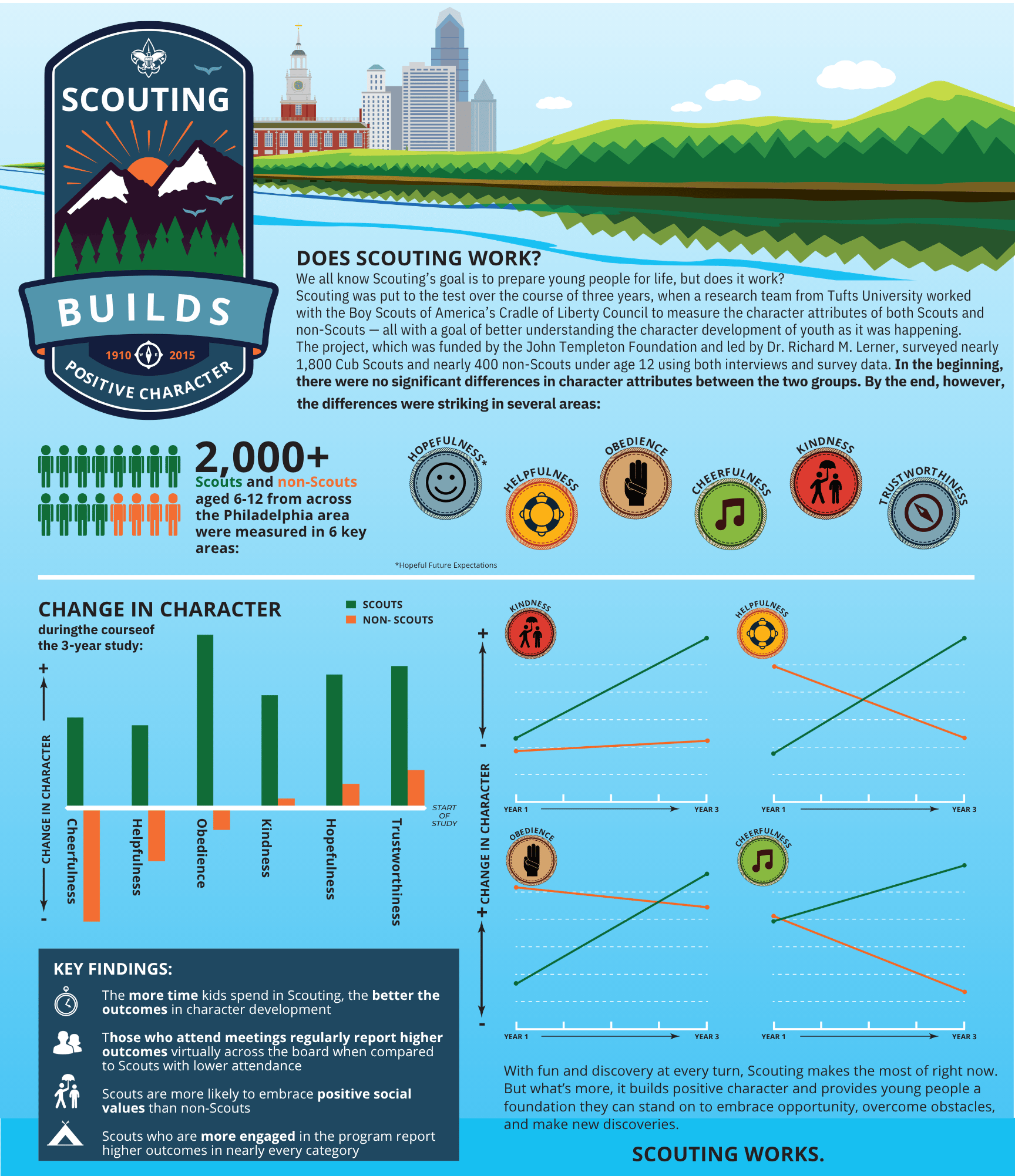
Short answer, yes! Scouting America works with colleges, universities, and other research based organizations to study the impact Scouting has on youth. These studies help us determine if we are meeting the needs of children and fulfilling our mission. Check out the infographic below on a large study of the impact of Cub Scouts.
In the study, over a three year period:
- Gains were made in six critical areas: cheerfulness, kindness, hopeful future expectations, trustworthiness, helpfulness, obedience
- Scouts were more likely than non-Scouts to embrace positive social values. Ask a Scout what’s most important to them, and they were more likely to respond with answers like “helping others” or “doing the right thing.” Ask a non-Scout the same thing, and they were likely to say “being smart,” “being the best” or “playing sports.”
- There were even variations within Scouting. For example, Scouts who attended meetings regularly reported higher character attributes than those who attended infrequently. In a nod to the importance of tenure, Scouts who stayed in the program longer reported higher character attributes.